Georgia Property Records
Georgia property records act as the foundation of real estate ownership. These records contain deeds, liens, plats, and mortgages that prove who owns a property and define its boundaries. They serve as trusted references for buyers, sellers, and heirs during any real estate transaction.
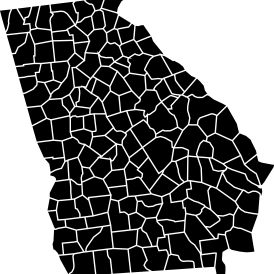
The state has 159 counties, each managed by a clerk of the superior court who keeps the official registry of deeds and land documents. Every county office provides access to property details for legal, financial, and historical use.
With nearly 4.7 million housing units, Georgia holds a strong housing market. Accurate property records support fair taxation, confirm rightful ownership, and strengthen community growth throughout the state.
Introduction to Property Records
Georgia land records date back to the colonial period and form a key part of the state’s history. From 1732 to 1755, Georgia was a trusteeship, where land went to males and their heirs.
After 1755, property grants carried no restrictions, and early transfers appeared in Savannah. Many early records appear in Pat Bryant’s Entry of Claims for Georgia Landholders, 1733–1755.
After independence, Georgia became a state-land state, with land distribution under the authority of the governor and later land courts from 1783 to 1909. The headright and bounty grant systems gave settlers access to land and shaped towns and farms throughout the region.
Today, county clerks maintain property records under the Georgia Superior Court Clerks’ Cooperative Authority (GSCCCA). This statewide network provides digital access to deeds, liens, plats, and property filings.
Recorded real property documents serve taxation, zoning, and land-use purposes and assist planners, surveyors, developers, and environmental agencies in land development, resource control, and community planning across Georgia.
What Counts as Property Records in Georgia
The following typically count as property records in Georgia, based on documents kept by clerks of superior court, county tax assessors, local planning and zoning offices, courts, and the Georgia Superior Court Clerks’ Cooperative Authority (GSCCCA).
Deeds & Title Records
These documents establish ownership, boundaries, and easements. County clerks record deeds and share them with the GSCCCA for centralized access. Large counties such as Fulton process almost 385,000 title-related filings each year. Records trace back to Georgia’s colonial period, with early deeds preserved in the State Archives.
Ownership History & Transfers
These records trace prior owners and verify the chain of title through grantor/grantee indexes. Across Georgia’s 159 counties, hundreds of thousands of transfers occur annually. Many properties show multiple transfers over time due to growth in housing and land development statewide.
Mortgage & Loan Documents
These documents include deeds of trust, mortgages, and security instruments that establish lender interests. Most home purchases in Georgia rely on mortgage financing, with average loan amounts reaching several hundred thousand dollars in metropolitan areas and lower values in rural counties.
Property Tax Records & Assessments
Maintained by county tax assessors, these records list assessed values, tax digests, and exemptions (seniors, veterans, etc.). Georgia counties set millage rates annually, averaging about 30 mills or $30 per $1,000 of assessed value. Since homes are assessed at 40% of market value, a $100,000 home taxed at 25 mills results in $1,000 in annual property taxes.
Property Values & Market Data
These reports reflect sale prices, appraisals, and value trends. Georgia’s median home value is approximately $332,000, and it has gradually appreciated over recent years. County assessors and planning offices use these figures to guide zoning updates, tax projections, and land-use decisions.
Building Permits & Zoning Records
Managed by local planning and zoning offices, these records include construction permits, zoning classifications, and land-use approvals. Tens of thousands of new permits are issued each year in fast-growing areas, with annual growth in new construction permits often reaching the high single digits.
Liens, Foreclosures & Judgments
These records show unpaid debts, court rulings, and property foreclosures. In Georgia, about 5,533 properties faced foreclosure filings, representing roughly 0.12% of all housing units, or about one in every 810 homes. County clerks record liens and judgments in official databases, which help buyers and lenders assess property risk and financial status.
Parcel Maps & Land Surveys
These maps show parcel boundaries, lot divisions, and plats. Georgia contains millions of parcels across all counties, with most already digitized for public access through GIS mapping. Local planning departments and county assessors use these maps to monitor growth and support infrastructure planning.
Georgia Property Law
Georgia property law is primarily found in Title 44 of the Code of Georgia, which covers property rights, ownership, and transfers.
Key chapters include Chapter 5 (Acquisition and Loss of Property), Chapter 4 (Determination of Boundaries), Chapter 2 (Recordation and Registration of Deeds), and Chapter 14 (Mortgages, Conveyances to Secure Debt, and Liens). Chapter 9 addresses easements, while Chapter 7 governs landlord-tenant relationships.
Title 36 provides local government authority over zoning and land use, particularly in provisions applicable to counties and municipal corporations. The Georgia Constitution also protects private property rights.
Deeds and Property Transfers
Property transfers in Georgia require written deeds that follow specific rules to protect buyers and sellers. Under GA Code § 44-2-14, any deed, mortgage, or property document must be an original that is properly witnessed before it can be recorded.
The document must also include the name and address of the person who should receive it back, printed clearly at the top of the first page. While forgetting this address doesn't make the recording invalid, including it helps the process run smoothly.
Recording deeds at the county courthouse creates a public record of who owns the property and protects the new owner's rights.
When a judge orders a property transfer through the court, GA Code § 44-2-244 provides the official form that directs the county clerk to cancel the old ownership certificate and create a new one for the new owner.
Mortgages and Deed of Trust
Georgia primarily uses security deeds and trust deeds for home financing rather than traditional mortgages. Under GA Code § 44-14-120, trust deeds allow property to be held by a trustee who ensures the borrower pays back their loan.
If the borrower stops making payments, the trustee can ask the court to enforce the debt, but only if lenders holding at least two-thirds of the loan agree. The court then orders the borrower to pay and gives them proper notice.
Under GA Code § 44-14-121, borrowers have the right to defend themselves in court by showing the amounts claimed are wrong or already paid, but they must provide a sworn statement.
For utility companies and railroads, GA Code § 44-14-36 requires special recording of their mortgages in every county where their property is located to protect everyone involved.
Easements and Land Use Rights
Easements grant specific rights to use another person's property for particular purposes.
Under GA Code § 44-9-1, private ways over another's land can be acquired through written agreements, by prescription through seven years of uninterrupted use on improved lands or 20 years on wild lands, by implication when necessary for enjoying the property, or through court-ordered purchase.
GA Code § 44-9-2 addresses light and air easements, stating these cannot be gained through long-term use alone, but when someone sells a house that depends on light from their adjoining land, that light easement automatically transfers to the buyer.
GA Code § 44-9-5 explains that easements of necessity end when the property owner purchases other land that provides access to a public highway.
Zoning Regulations
Local governments in Georgia have the authority to regulate property uses under GA Code § 36-66-2, creating zoning ordinances that designate areas for residential, commercial, industrial, or agricultural purposes. Before making zoning decisions, GA Code § 36-66-4 requires public hearings, with notices published in local newspapers at least 15 days in advance.
When property owners request rezoning, signs must be posted on the property. If a rezoning request is denied, the same property cannot be reconsidered for at least six months. Under GA Code § 36-66-5, local governments must adopt clear standards and procedures for hearings, allowing supporters and opponents to present their views for at least ten minutes.
Public Records Law
Property records in Georgia are public documents that anyone can access. Under GA Code § 50-18-70, Georgia's Open Records Act promotes open government and requires public records to be available for inspection within three business days of a request.
Under GA Code § 50-18-71, agencies must respond to requests promptly and may charge reasonable fees for copying. GA Code § 50-18-102 establishes that all records created with public funds are public property, and destroying or altering records without authorization is a misdemeanor.
The Role of Government Agencies
Different government offices in Georgia help manage, record, and protect property information:
Georgia Superior Court Clerks’ Cooperative Authority (GSCCCA): This office runs a statewide website where people can look up deeds, liens, plats, and business filings from all 159 counties. It helps confirm who owns land and tracks legal property records.
County Clerk of Superior Court Offices: These local offices keep official copies of deeds, mortgages, liens, and court documents. They record and organize these papers so property ownership stays clear and protected.
County Tax Assessor Offices: These offices decide how much each property is worth for tax purposes. They also keep tax records and handle exemptions for homeowners and veterans.
Local Planning and Zoning Offices: These offices control how land can be used in each community. They approve building projects, zoning changes, and new developments to make sure growth follows local rules.
Georgia Archives: This agency preserves historic land deeds, maps, surveys, and government documents. It helps people research property history and learn how Georgia’s communities developed over time.
Georgia Department of Revenue (DOR): This state agency oversees property tax laws, provides guidelines for assessors, and works to keep property tax systems fair across all counties.
How to Access Property Records
Georgia offers several convenient ways to find recorded property documents:
Online: Search deeds, liens, and plats statewide through the Georgia Superior Court Clerks’ Cooperative Authority (GSCCCA). You can also explore historic land records, maps, and plats using the Georgia Archives Virtual Vault. Some county tax assessor websites also provide property lookups.
In Person: Visit your local county clerk of the superior court or county tax assessor’s office to view or request property documents. Most offices provide computer terminals or record books for public searches. Staff members can assist in locating older or archived documents.
By Mail: Send a written request that includes the property owner’s name, parcel number, and property address, along with any required copying or certification fees. Check your county’s official website for the correct mailing address and accepted payment methods before sending your request.
By Phone: Call your local clerk or assessor’s office to ask about record availability, fees, office hours, and required forms. Some offices can confirm record details or guide you through the online search process.
Limitations of Accessing Property Records
Although Georgia real estate records are open to the public, several limitations can affect access and accuracy:
Privacy Restrictions: Sensitive information, such as Social Security Numbers, financial account data, or certain ownership details, is legally protected and not available for public inspection under state and federal privacy laws.
Incomplete Digital Databases: Many counties are still digitizing older records. Some deeds, plats, and liens may exist only in paper form and must be viewed in person at the clerk’s or tax assessor’s office.
Processing Delays: Requests by mail or in person may take days or weeks to process, especially during peak periods or when multiple departments handle the same record.
Fees and Copy Costs: While online searches may be free, certified copies, detailed searches, or mailed documents often require administrative fees that vary by county.
Data Accuracy Issues: Recently recorded deeds or transfers may not appear in online databases immediately. Errors in indexing or scanning can also cause missing or mismatched entries.
Limited Search Tools: Some county websites offer only basic search options, requiring users to know exact parcel numbers, owner names, or document details.
Restricted Office Hours: In-person visits depend on local office schedules, which may vary between counties and often close on state holidays or weekends.
How Property Records Are Updated
Georgia real property records are regularly updated by county clerks, tax assessors, and local planning offices whenever ownership, financing, or land use changes occur. Below are common triggers and how often each record type is typically updated:
Deeds & Title Records / Ownership Transfers: Updated each time a property is sold, gifted, or transferred. Recording usually happens within a few business days after the new deed is filed with the county clerk of the superior court.
Mortgage & Loan Documents: Updated when a new mortgage, lien, or satisfaction of debt is recorded. These filings occur as needed and are processed through county recording offices.
Property Tax Records & Assessments / Property Values: Updated annually by county tax assessors to reflect fair market value, new construction, or changes in property use.
Building Permits & Zoning Records: Updated whenever a permit is issued or modified by local planning or zoning offices. These updates record new developments, renovations, and land-use approvals.
Liens, Foreclosures & Judgments: Updated as soon as court orders, liens, or foreclosure deeds are filed with the county clerk.
Parcel Maps & Land Surveys: Updated when new plats or boundary surveys are recorded. Many counties digitize these maps and post revisions within weeks of submission, like the Fulton County Clerk of Superior and Magistrate Courts Real Estate Division.
The Importance of Property Records
Property records matter across Georgia because they help document ownership rights, support fair taxation, and promote transparency in real estate transactions. Below are some common ways people may use these records:
Homebuyers: Review deeds, liens, and past ownership details before making a purchase. Recorded property documents help them confirm that the seller has legal ownership and that no debts or disputes exist.
Homeowners: Keep track of assessed values, property taxes, and boundary lines. These records also support loan applications, refinancing, or home improvement permits.
Sellers: Use official records to verify ownership and disclose accurate information to potential buyers during property transfers or closings.
Renters: Check ownership information to avoid rental scams and confirm that their landlord is the legitimate property owner.
Investors: Examine sales data, market trends, and zoning changes to help guide decisions about where and when to buy or develop property.
Attorneys and Heirs: Use land titles, deeds, and probate records to settle inheritance issues, resolve disputes, or clarify property ownership in court.
Developers and Builders: Review zoning maps, permits, and land surveys to help confirm that projects follow local laws and land-use regulations.
Community Members: Access public zoning and planning records to stay informed about neighborhood developments, rezoning hearings, or new construction projects that may affect their community.
What Information Do Georgia Property Records Contain?
Georgia public property records generally provide information about land and ownership. These records often contain:
Owner details, such as names and transfer history
Property descriptions including parcel numbers, lot size, and legal boundaries
Assessed and market values used for tax purposes
Tax payment status and any outstanding balances
Sales history showing past purchase prices and dates
Land use or zoning classifications that describe permitted activities
Building characteristics such as square footage, year built, and improvements
Recorded liens or encumbrances that may affect ownership rights
Geographic data and parcel maps showing location and neighboring properties
Resolving Property Disputes
There are several ways to resolve a property dispute in Georgia, depending on the issue and amount involved. Below are common options:
Boundary Disputes and County Lines: Per GA Code § 36-3-20, if your dispute involves a county boundary, the grand jury may present it to the Governor, who appoints a licensed surveyor to define the line and record it with the Secretary of State.
Alternative Dispute Resolution (ADR): For local land-use or planning disagreements, mediation, arbitration, or facilitation can be used. The Georgia Department of Community Affairs outlines how this process works.
Court Actions and Legal Remedies: If you need a formal resolution to issues such as title disputes, easement rights, or ownership conflicts, you may file a case in the superior court.
Small Claims or Magistrate Court: For smaller claims, usually under $15,000, you can bring your case to the magistrate court without an attorney to settle property-related disagreements.
Private Agreement & Written Settlement: You and your neighbor can settle boundary or easement issues by creating a written agreement and recording it with the county, so future buyers have notice.
FAQs
To do a Georgia title search, visit your county’s clerk of superior court office or search public records online through the Georgia Superior Court Clerks’ Cooperative Authority (GSCCCA) or the county website to review deed records, liens, and ownership history for the property.
Similar to a Georgia title search, you can locate property liens by visiting the Georgia Superior Court Clerks’ Cooperative Authority (GSCCCA) website or your county clerk’s office. You can search by owner name, address, or parcel number to view recorded liens.
Georgia property ownership may be held as sole ownership, tenancy in common, where co-owners hold separate shares, or joint tenancy with right of survivorship, transferring ownership to surviving owners.
Georgia property may transfer through a quitclaim, warranty, or limited warranty deed. A deed moves ownership from the grantor (seller) to the grantee (buyer). Warranty deeds generally provide stronger proof of ownership.
A quitclaim deed in Georgia transfers a person’s interest in a property without guaranteeing ownership. It simply passes any rights the grantor may have to the grantee.
There is no fixed deadline for transferring property after death in Georgia. The process depends on probate, which usually takes 12–18 months, but complex estates or disputes can extend it for several years.
In Georgia, a house cannot be legally sold without your consent if your name is on the deed. All owners listed must typically sign the deed for a valid sale.
Adding someone to a deed exposes the property to the co-owner’s creditors, reduces your control over decisions, may create legal or tax complications, and can make removing the co-owner challenging.